Deploy AI-powered assistant that augments MSP technician capabilities with intelligent diagnostics, automated remediation, and guided troubleshooting workflows. Features natural language interaction, integration with all OpenFrame data sources, and learning from resolution patterns to provide context-aware recommendations based on historical data and best practices.
OpenFrame v0.4.4 - Mingo AI Assistant & Guardrails
Version: 0.4.4
AIAI INTEGRATIONAUTOMATIONDEVOPSENTERPRISE SOLUTIONSIT MANAGEMENTMONITORINGMSPOPENFRAMEPLATFORM UPDATESSECURITY
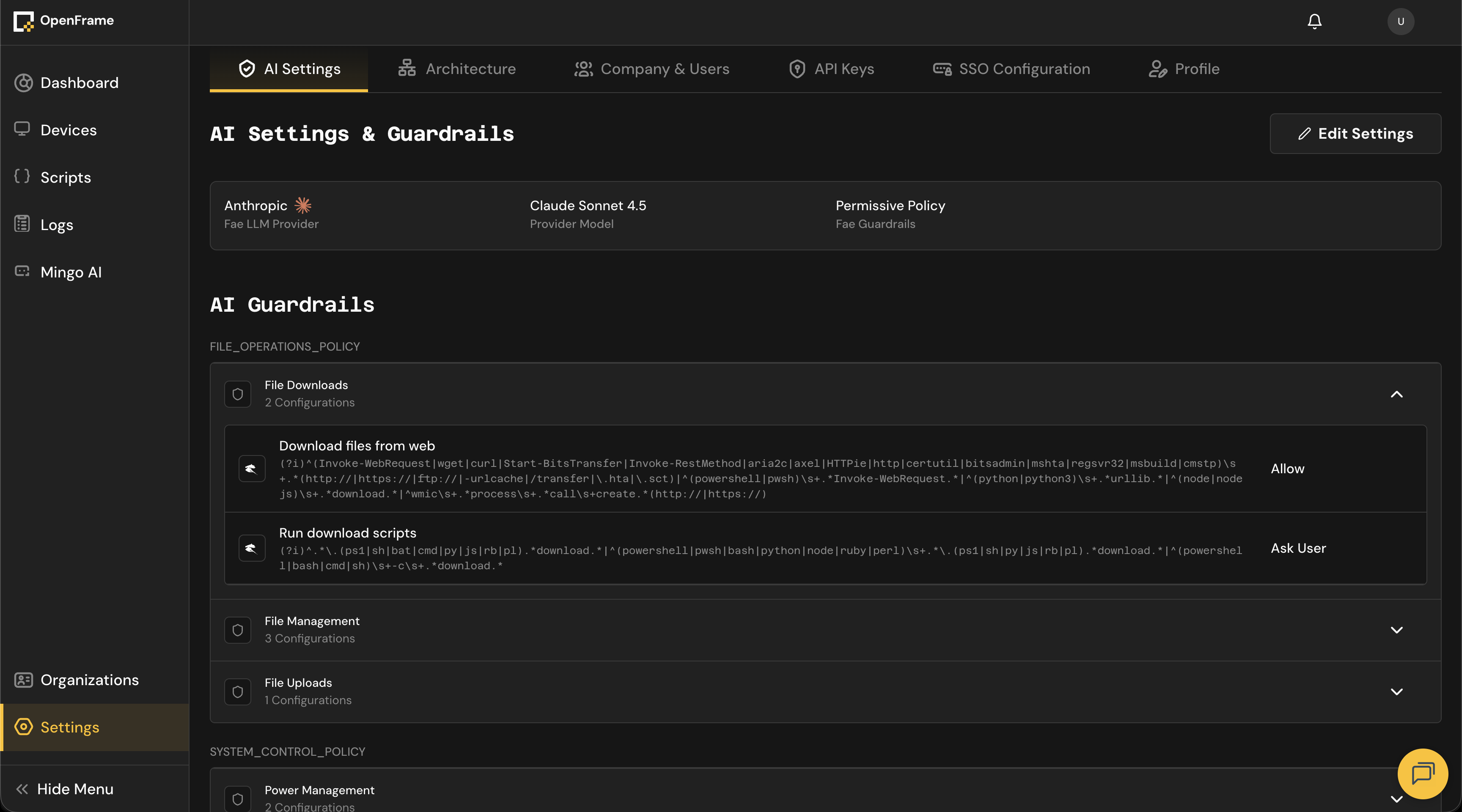
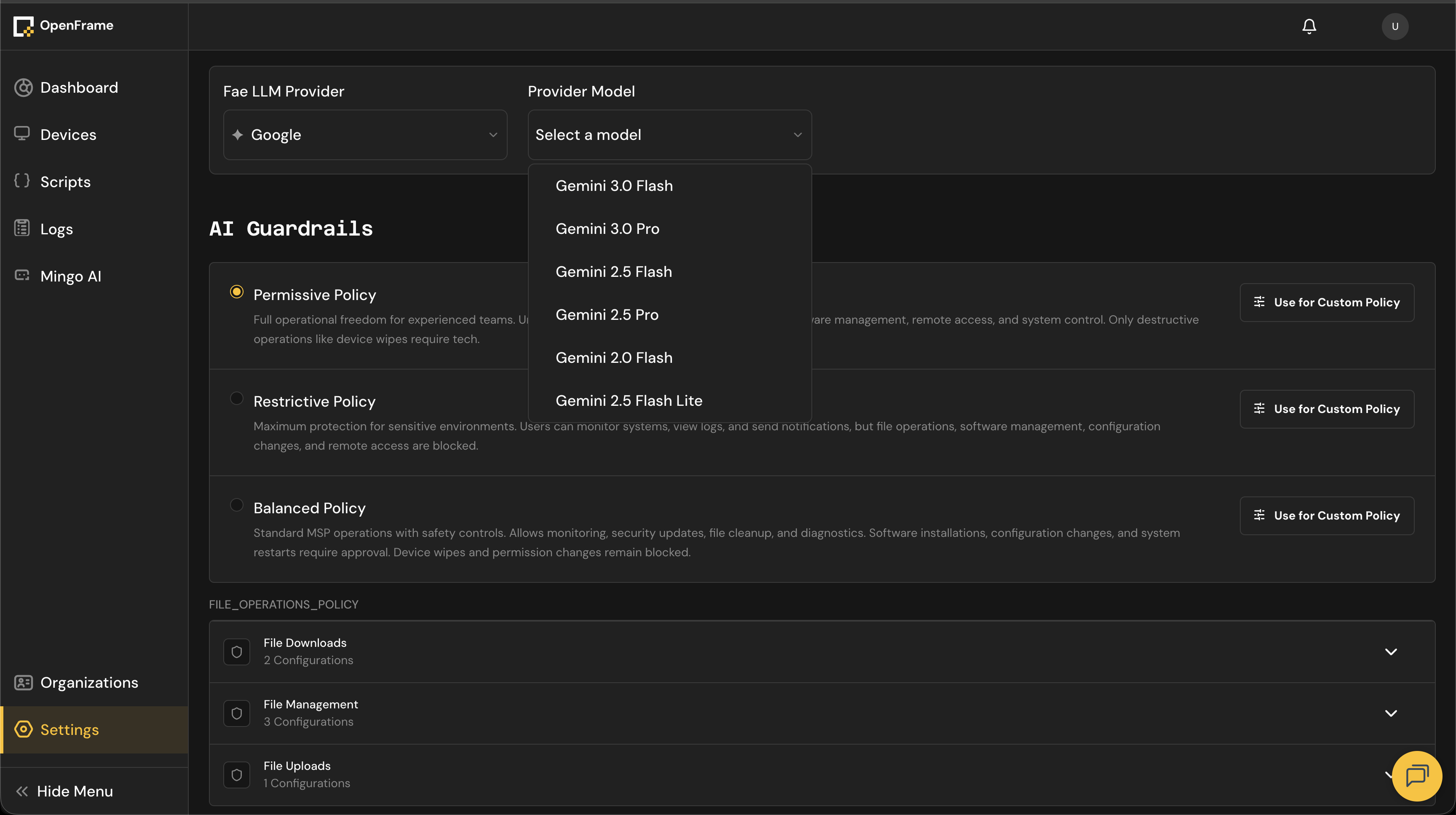
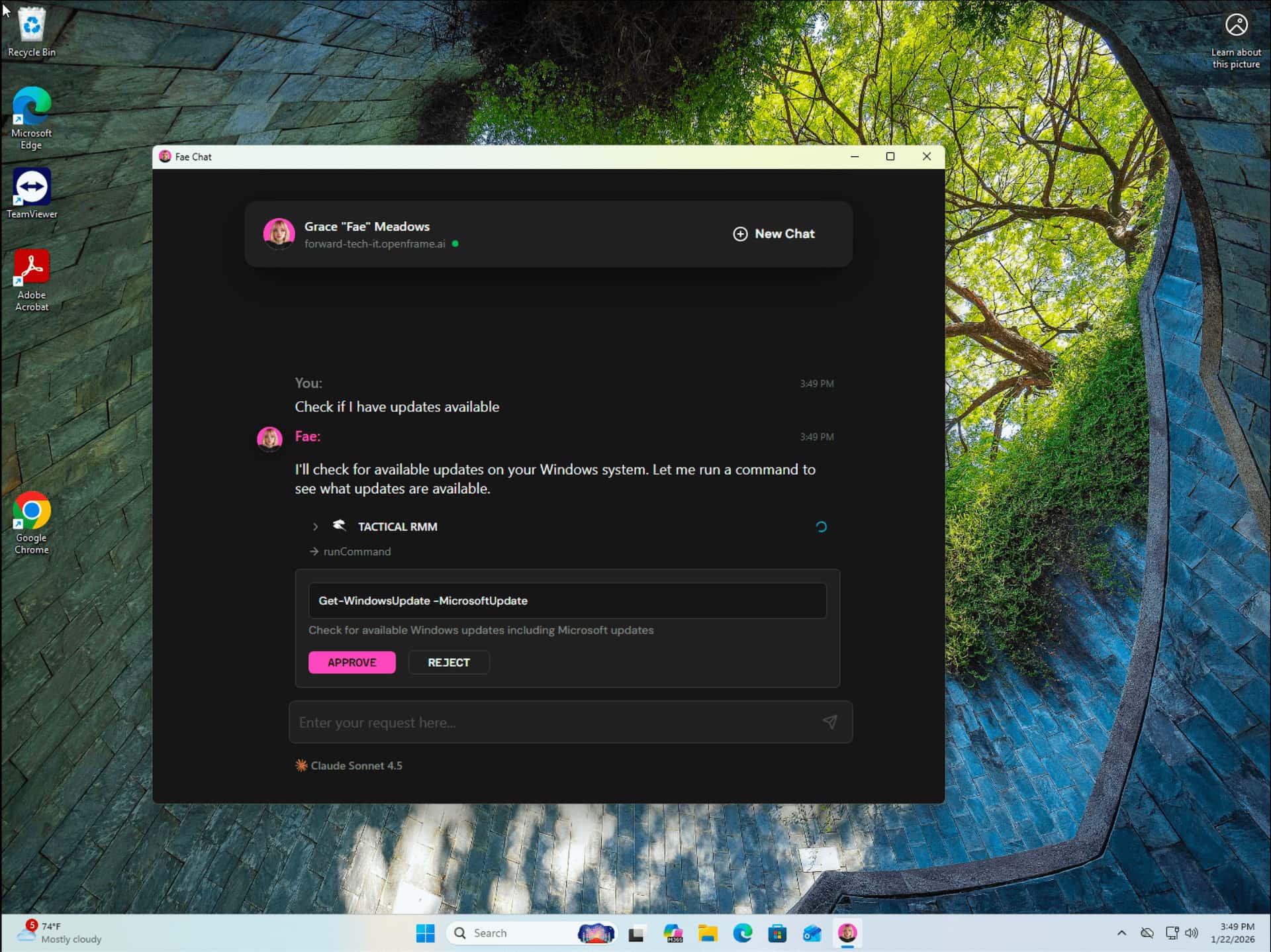
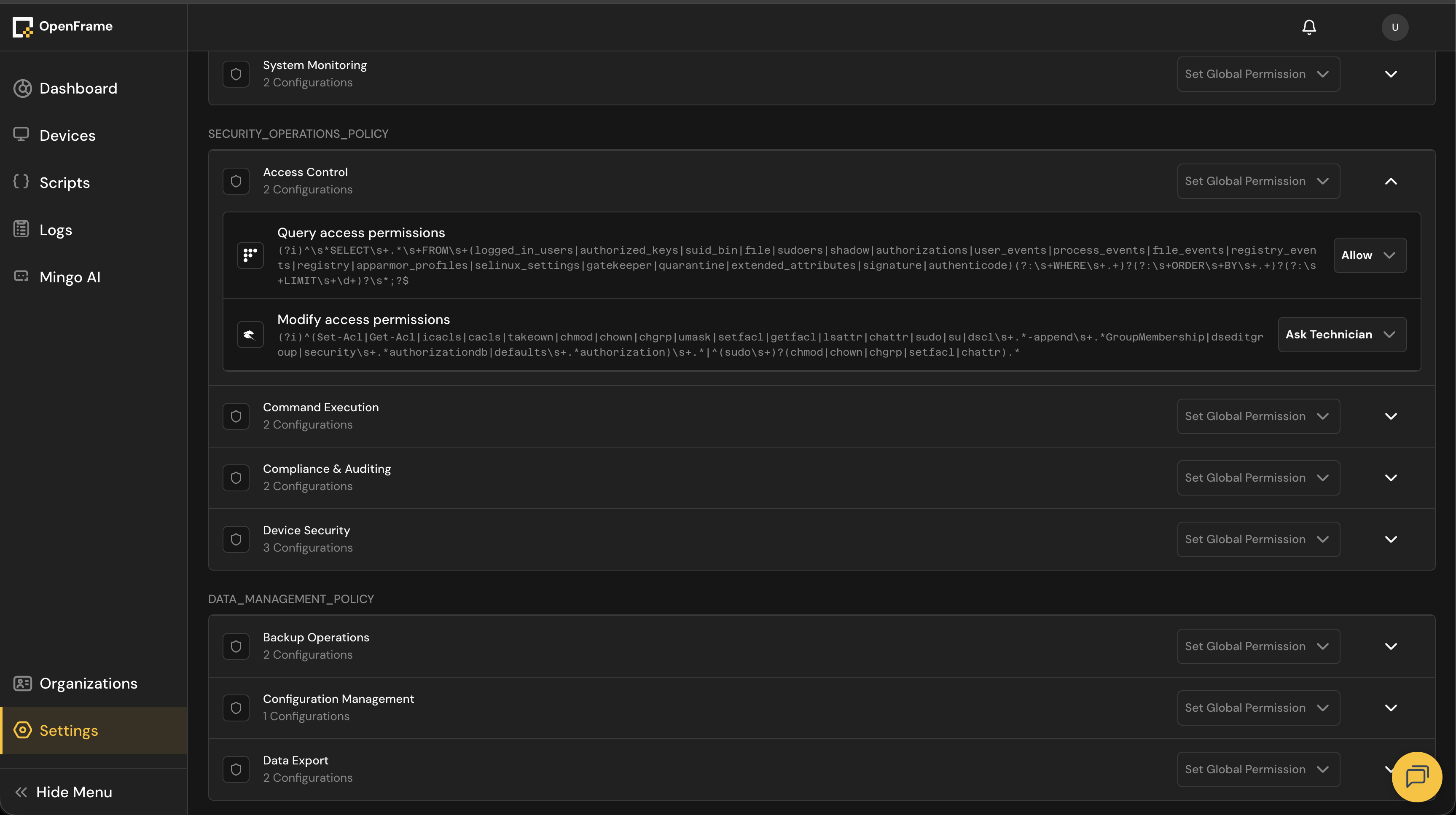
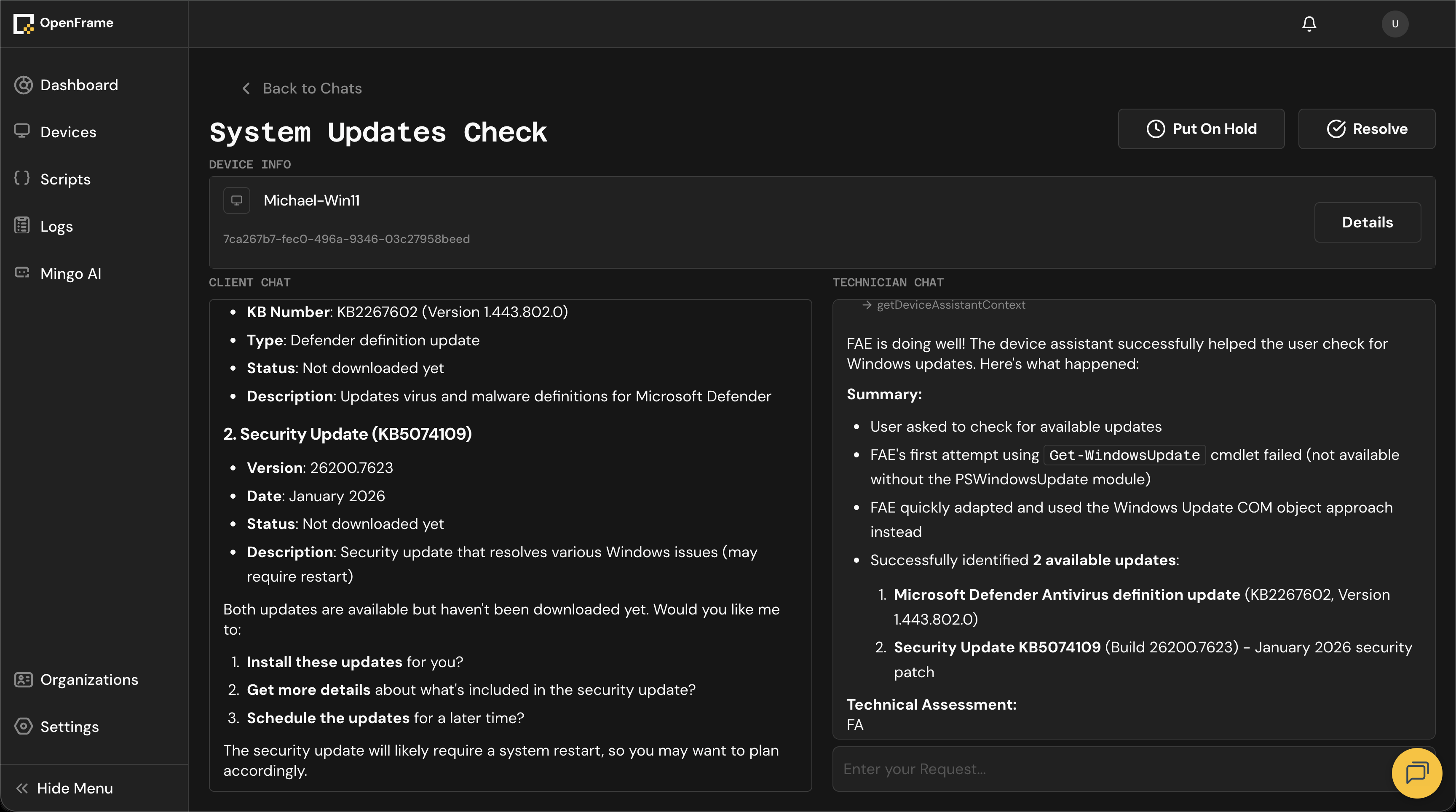
OpenFrame v0.4.4 introduces Mingo AI, an intelligent technician assistant that revolutionizes MSP operations with AI-powered diagnostics and automated remediation. This major release implements comprehensive AI guardrails and human-in-the-loop approval workflows to ensure safe, controlled AI operations. Enhanced with internal monitoring infrastructure using Grafana and Loki, this release establishes a robust foundation for AI-augmented IT management with enterprise-grade safety controls.
Features Added6
Mingo AI - Intelligent Technician Assistant
Human-in-the-Loop Approval Workflows
Comprehensive approval system enabling human oversight for critical AI actions, automated scripts, and system modifications. Supports multiple authorization tiers, escalation paths, approval delegation, and time-sensitive authorization requests with real-time notifications, detailed action previews, and complete audit logging.
AI Guardrails System
Establish comprehensive safety framework that enforces AI policies, prevents harmful actions, and maintains ethical operation boundaries. Includes prompt injection protection, output validation, action impact assessment, policy-based constraints, behavior pattern monitoring, rate limiting on sensitive operations, and real-time intervention mechanisms.
Internal Monitoring and Logging Infrastructure
Implement internal monitoring infrastructure for OpenFrame clusters with Grafana and Loki integration. Covers both OSS (self-hosted) and SaaS deployment versions, enabling visibility into platform health, performance metrics, and usage analytics.
Tenant-Specific AI Security Policy Management
Per-tenant AI security policy management allowing local configuration of allow/disallow rules, capability restrictions, regex patterns, API and tool mapping, RAG support for tenant-specific contexts, and dynamic policy updates without service restart.
Gemini 3.0 Support
Added support for Google's Gemini 3.0 AI model, expanding AI capabilities and model options for intelligent assistant functionality.
Bugs Fixed4
Multi-Select Filtering on Logs Page
Fixed filtering on the Logs page to correctly support multiple simultaneous selections. Previously, only the last selected filter option remained active, and earlier selections were automatically cleared.
Fleet Logs Not Displaying
Resolved issue where fleet logs were not appearing on the Logs page, restoring full visibility into fleet operations.
Log Timestamp Display Issues
Corrected timestamp display problems on logs to ensure accurate time representation for all log entries.
Scripts Executing on Deleted Devices
Fixed issue where scripts could be executed on deleted devices in batch mode. Script execution is now restricted to ONLINE and OFFLINE devices only.
Improvements12
NATS Messaging System Integration
Replaced SSE-based chat messaging infrastructure with NATS messaging system for improved real-time chat functionality on both frontend and backend, providing more reliable and scalable communication.
Pending Invitations in Users List
Extended the users list to display both registered users and users with pending invitation status, providing complete visibility into user onboarding pipeline.
Cluster ID Provisioning Optimization
Updated cluster provisioning logic to reuse gaps in cluster IDs caused by deleted clusters, detecting missing IDs and provisioning new clusters using the lowest available ID for more efficient resource utilization.
Invitation Management Enhancements
Updated invitation handling to globally exclude accepted and deleted invitations from backend endpoints, and implemented resend functionality for expired invitations.
OpenFrame SSO Auto-Login
Implemented automatic login with OpenFrame SSO after email verification, streamlining the authentication experience.
User Profile Editing
Added user profile editing capabilities, allowing users to manage their account information directly within the platform.
OS-Based Device Filtering for Scripts
Implemented device filtering by operating system before script execution to ensure scripts only run on compatible devices.
Shared Infrastructure Migration
Migrated to shared Kafka, Pinot, and Zookeeper infrastructure for improved resource efficiency and scalability.
Windows Code Signing
Implemented automated code signing for Windows builds during CI/CD pipeline to prevent antivirus false positives and improve security.
DEV Environment Group Permissions
Updated Terraform scripts to correctly assign permissions to groups in the DEV environment, ensuring proper access level mappings.
Verify Account Transactional Email
Implemented account verification transactional email system to improve user onboarding and account security.
Comprehensive Test Automation Framework
Refactored test automation framework with improved structure, data generators replacing data providers, enhanced Allure reporting with epics and features, comprehensive test coverage for user invitations, organization management, and user deletion workflows.
Related Links
Github Release0.4.4