OpenFrame is on your phone now! · iOS and Android apps are live. Get alerts and handle tickets on the go!
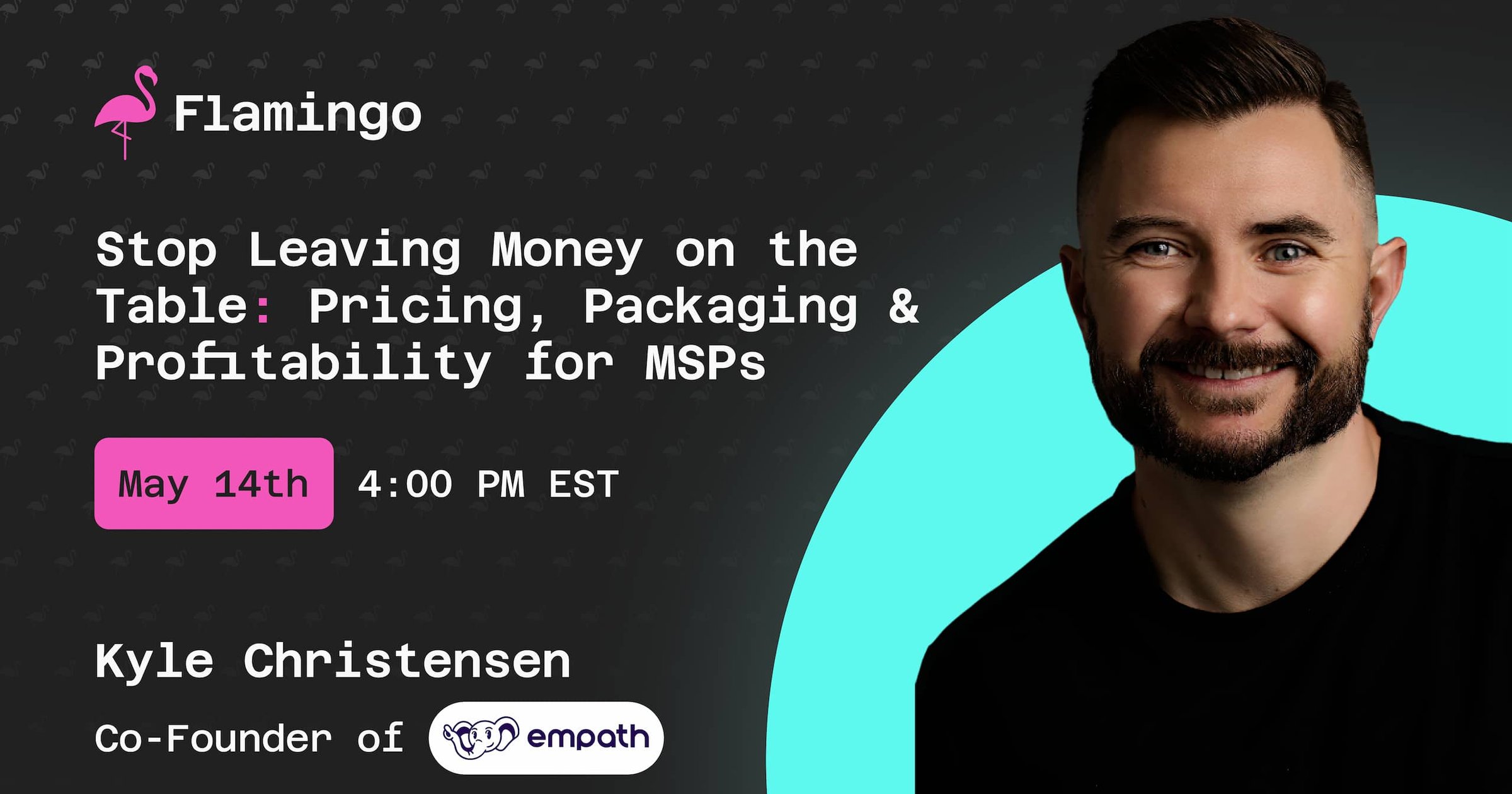
Stop Leaving Money on the Table: Pricing, Packaging & Profitability for MSPs
Presenters:

Thursday, May 14
4:00 PM EDT · 58m
America/New_York
MSPs love saying they want to grow. But most price like they're scared of their own invoice.You discount too early. You package too vaguely. You sell support instead of outcomes. Then every new client feels like a margin hostage situation, and you wonder why.Kyle Christensen, Co-Founder of Empath, is dropping into the OpenMSP community to break it down.What we're covering: Why most MSP pricing problems are actually positioning problems How weak packaging creates scope creep before the deal is even signed Why your stack matters way less than you think How to stop selling a pile of services and start selling clear business outcomes (the kind that are easy to sell, and easy to sell a lot of) This isn't theory. It's the stuff that shows up on your P&L, your service desk, your sales calls, and your sanity.If you're tired of being busy, growing, and somehow still wondering where the money went, come hang out. Worst case, you walk away with one pricing tweak that pays for the next year of your stack.
BEST PRACTICESBUSINESSMSPMSP BUSINESSMSP STRATEGYPRICING
Past Event

Related Content
Webinars
Podcasts
Case Studies
Events
Blog Posts
Onboarding Guides
Frequently Asked Questions
MSP AI Agents
Can AI Agents Really Close Tickets Without a Technician?
Yes. In production MSP shops today, 10% to 25% of tickets close before a human opens them. Thread alone has processed 173 million tickets across 750-plus MSP partners at 96% triage accuracy, handing back 490,000-plus technician hours. Agents own the low-risk, high-volume work (password resets, MFA enrollment, known installs, onboarding and offboarding) and flag anything that touches production data or needs judgment for a human to take.
How Much Can AI Agents Save an MSP?
On a five-person desk, reported deployments show $78,000 to $130,000 in annual direct labor savings, roughly 30% fewer escalations, and 15% to 20% better SLA compliance. Broader MSP adoption data adds ticket handling time cut by 45% and five to 12 points of margin, all from reclaimed capacity rather than headcount cuts.
AI MSP
How Are MSPs Using AI?
MSPs use AI to triage and route tickets, cut alert noise, schedule patches, assist L1 security work, and draft client reports. Kaseya's 2025 benchmark found 30% already use it to eliminate tedious tasks, with ticket triage the most common starting point.
What AI Tools Do MSPs Use?
Most MSPs start with AI features inside their existing PSA, RMM, and ticketing systems rather than standalone products. Common categories include AI ticket triage, alert correlation, scripting assistants, and AI-native all-in-one platforms like OpenFrame that run intelligence across the whole stack.
Where Should an MSP Start With AI?
Start with a readiness assessment, not a tool purchase. Confirm your ticket history is clean and your RMM, PSA, and monitoring systems connect. Then pick one high-volume, low-risk workflow, usually ticket triage, and pilot it on internal tickets before any client sees it.
Which Tasks Should an MSP Automate First?
Automate high-volume, low-risk tasks first. Ticket triage and alert noise reduction top the list because they run constantly and a human still resolves the underlying issue. Save security approvals, billing changes, and client-facing actions for later, always with a human in the loop.
AI Safety
Is AI Safe for MSP Client Data?
It can be, with governance. Keep a human in the loop on high-risk actions, log every automated step for audit, and choose platforms that keep your data yours with no vendor lock-in. Pilot on internal data first so you catch issues before client systems are involved.
AI for MSPs
How Do You Measure AI ROI in an MSP?
Set a baseline before rollout, then track tickets closed per technician, mean time to resolution, percentage of tickets resolved with no human touch, technician hours reclaimed, and cost per ticket. AI-driven automation commonly cuts operational cost per ticket by 25 to 40%.
ServiceNow
Is ServiceNow worth it for small businesses?
Rarely. ServiceNow is built for enterprises with 500+ employees and dedicated IT ops teams. A 25-person company paying $100/user/month spends $30,000/year on licensing alone – before implementation, customization, and the admin to keep it running. That's often more than [the entire cost of IT support for a small business](https://www.flamingo.run/blog/cost-of-it-support-for-small-business). Freshservice or Zoho Desk covers 90% of what most SMBs would use at a tenth of the cost.
What's the cheapest ServiceNow alternative?
Spiceworks is free. Zoho Desk starts at $14/agent/month. Jira Service Management is free for up to 3 agents. For most small businesses, Freshservice at $19/agent/month hits the right balance between capability and cost.